
Introduction
The growing availability of information about psychedelic mushrooms has made it easier for people to compare different products, but it has also created a problem: marketing language can sometimes make products appear more consistent or predictable than they actually are. Terms such as “premium”, “high quality” and “potent” may sound informative, yet they do not necessarily explain what makes one mushroom product different from another.
For readers researching Magic Mushrooms Canada Online, understanding how to evaluate information is more useful than simply looking for the most impressive description. The same applies when encountering terms such as Premium Magic Mushrooms Canada, which can describe a marketing position rather than an objectively measurable standard.
Quality can involve several different factors, including product condition, transparency, storage, packaging and the reliability of available information. None of these factors should be considered in isolation.
This article examines the characteristics that can help readers assess mushroom-related information more critically while explaining why appearance and promotional language should not be treated as definitive measures of quality.
What Does “Quality” Actually Mean for Magic Mushrooms?
The word “quality” can have several meanings when applied to mushroom products. Someone may use it to describe appearance, freshness, packaging, perceived potency or simply the overall purchasing experience. Without a clear definition, the term can become difficult to evaluate.
From a physical perspective, quality may involve the condition of a dried product and whether it has been appropriately protected from moisture and environmental exposure. Packaging can also influence how well a product is maintained during storage and transportation.
From an information perspective, quality can refer to how clearly a product is described. A useful listing should help readers understand the format, contents and relevant characteristics without depending entirely on promotional language.
Chemical consistency is a more complicated issue. Natural mushroom material can vary, and appearance cannot provide a precise measurement of psychoactive compound concentrations. This is one reason why claims about a product being exceptionally strong should be approached cautiously.
The term “premium” can also mean different things to different sellers. One business might use it to describe appearance, while another may use it to describe a particular product category or cultivation method.
Consequently, readers should not assume that a premium label represents an independently verified standard. Instead, they can examine the specific information supporting the claim.
A more useful definition of quality therefore considers several measurable or observable characteristics rather than relying on a single adjective.
Why Appearance Is Not a Reliable Measure of Potency
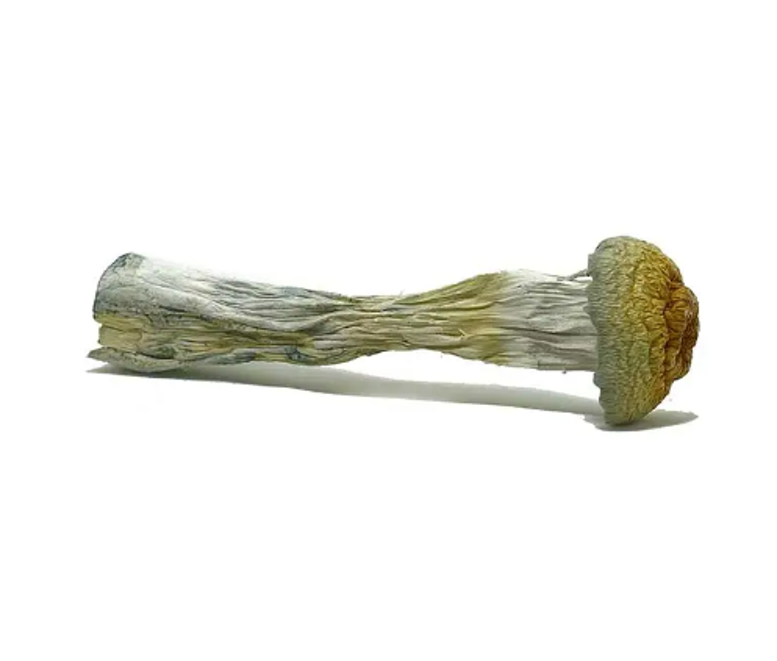
Visual appearance is often one of the first things people notice when examining dried mushrooms. Caps and stems can vary in colour, shape, thickness and size, creating obvious differences between individual specimens.
However, these characteristics do not provide a reliable measurement of potency. Mushroom chemistry can vary naturally, and visual characteristics cannot establish the precise concentration of psychoactive compounds.
Size is a particularly common source of misunderstanding. A larger mushroom is not necessarily more potent than a smaller one. Likewise, colour differences can result from species, genetics, maturity, drying or storage rather than indicating a particular chemical profile.
The same applies to photographs used in online listings. Images can show physical characteristics, but lighting and photography can influence how a product appears. A photograph cannot determine its chemical composition.
This does not mean appearance is completely irrelevant. Significant changes in physical condition can sometimes indicate that a product has been exposed to unsuitable environmental conditions. However, appearance should be considered alongside other information rather than treated as a scientific measurement.
Readers should therefore be cautious when product descriptions imply that visual characteristics prove superior potency or quality.
A responsible comparison focuses on what can actually be established. Clear descriptions, appropriate packaging and transparent information are more useful indicators of an informative product listing than claims based solely on colour, size or appearance.
Understanding Product Descriptions and Variety Names
Product descriptions are an important source of information when researching mushrooms online. However, readers need to understand the difference between scientific terminology, community terminology and marketing language.
Species names are used by mycologists to classify fungi scientifically. Informal variety names may be used within enthusiast communities to distinguish particular cultivation lines or characteristics. These names can be useful for discussion, but they do not automatically provide a precise measurement of chemical composition.
A product description that simply provides a distinctive name without additional context may therefore leave important questions unanswered. Readers can look for descriptions that clearly identify the product format and explain relevant characteristics without making unsupported promises.
The same principle applies to potency claims. A statement that a particular variety is “extremely strong” may be based on anecdotal reputation rather than standardised testing.
Readers should also be aware that different products can have different levels of consistency. Natural biological variation means that two mushrooms from the same broad category may not necessarily contain identical concentrations of psychoactive compounds.
This is one reason why scientific terminology and commercial terminology should not be treated as interchangeable. A name can help identify how a product is presented, but it cannot answer every question about its chemical properties.
Clear product descriptions should therefore be judged by how much useful information they provide rather than how impressive the wording sounds.
The more transparent the description, the easier it becomes for readers to distinguish factual product information from promotional positioning.
The Importance of Storage, Packaging and Physical Condition
Storage is an important part of maintaining the physical condition of dried mushrooms. Although drying removes much of the natural moisture, dried fungal material can absorb moisture from the surrounding environment.
Humidity can affect texture and overall condition. Repeated exposure to air or unsuitable environments may gradually change a product, which makes appropriate packaging an important consideration.
Packaging can also provide useful information about how an ecommerce business approaches product handling. A well-described product should provide relevant storage guidance where appropriate rather than leaving consumers to make assumptions.
Temperature and environmental changes may also matter. Specific storage recommendations can differ between products, so readers should follow the information supplied with the particular product rather than applying one universal rule.
It is important to distinguish between physical preservation and potency. Appropriate storage can help maintain a product’s physical condition, but it cannot guarantee a particular psychedelic experience.
Secure storage is also essential in a household. Psychoactive mushroom products should be kept away from children and pets and should not be placed somewhere they could be mistaken for ordinary food.
Packaging should therefore be viewed as one part of a broader quality assessment. It can contribute to maintaining physical condition and provide information about handling, but it cannot independently establish the chemical characteristics of the product.
For anyone comparing mushroom products online, storage and packaging information can be useful because it provides a more concrete basis for evaluation than promotional adjectives.
How to Recognise Responsible Online Product Information
A responsible online product page should make it relatively straightforward for readers to understand what is being offered. Clear information can be more valuable than an extensive list of promotional claims.
Readers can begin by checking whether the product format is clearly identified. Dried mushrooms, capsules, edibles and other preparations are not interchangeable, and the description should make the distinction clear.
Ingredients are particularly important for processed products. Consumers should be able to determine whether they are looking at whole mushroom material, an extract or another formulation.
Quantity information should also be presented clearly. Vague descriptions make meaningful comparisons difficult and can encourage readers to rely on appearance or marketing language instead.
Website policies provide another useful source of context. Information about privacy, age requirements, shipping, returns where applicable and terms of service can help readers understand how an ecommerce business operates.
Canadian consumers should also distinguish between online availability and legal status. A product appearing on a website does not, by itself, establish that its sale, possession or purchase is legally permitted. Applicable Canadian rules can change, so current official information should be consulted when legal questions arise.
Health-related claims deserve additional scrutiny. Ongoing scientific research into psilocybin does not mean that commercial products should be presented as guaranteed treatments or cures.
A transparent online environment allows readers to make their own informed assessment without relying on exaggerated promises. This makes clarity and accuracy more meaningful quality indicators than persuasive marketing language.
Building a More Reliable Mushroom Product Comparison
Comparing products effectively requires looking at several characteristics at once. Instead of asking which listing sounds the most impressive, readers can create a simple framework based on information that can actually be evaluated.
- The first consideration is product identity. Is the format clearly stated? Does the description explain whether the product consists of dried mushrooms, an edible, a capsule or another preparation?
- The second is information quality. Are relevant details clearly explained, or is the page dominated by vague promotional claims?
- The third is physical condition and storage. Is the product appropriately packaged? Is there clear information about storage and environmental exposure?
- The fourth is transparency. Are ingredients, quantities and applicable policies clearly presented? Can readers find information about privacy and other aspects of the purchasing process?
- The fifth is evidence versus anecdote. Are claims supported by credible information, or are they primarily based on customer stories and community reputation?
- Finally, readers should consider responsibility and legality. Psychedelic products can affect perception and judgement, and Canadian legal requirements should be checked using current authoritative sources.
This framework helps prevent one characteristic from dominating the entire decision. A product should not automatically be considered superior simply because it has an attractive photograph, an impressive name or a claim about exceptional potency.
The objective is not to identify a universally “best” mushroom. Instead, it is to understand what information is available, what remains uncertain and whether the claims being made can reasonably be supported.
Conclusion
Evaluating magic mushroom quality requires more than choosing products described with terms such as “premium” or “high potency”. These labels can be useful for understanding how a seller positions a product, but they do not automatically establish an objective quality standard.
Appearance, product names and customer testimonials all have limitations. More meaningful considerations include clear descriptions, transparent ingredient information, appropriate packaging, storage guidance and responsible communication.
For readers researching Magic Mushrooms Canada Online, a critical approach can make online information easier to navigate. Similarly, terms such as Premium Magic Mushrooms Canada should encourage readers to examine what the description actually means rather than accepting the label at face value.
The most reliable approach is to compare several types of information and recognise where uncertainty remains. By separating observable characteristics from marketing claims, readers can develop a more realistic understanding of mushroom products and the broader psychedelic marketplace.