
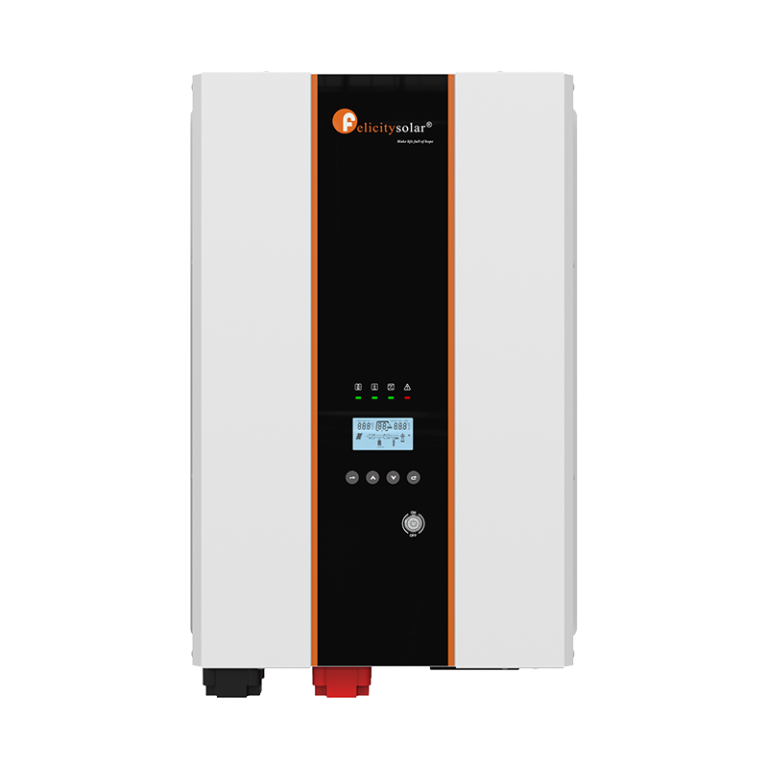
The Inverter-Battery Relationship Is Fundamental
In an off-grid solar system, the inverter and the battery bank are the two most critical components, and they need to work together as a matched pair rather than as independent choices made separately and then connected together. The compatibility between these two components — not just at the voltage level but at the level of communication, charging protocol, and protection coordination — determines how well the system performs and how long the batteries last.
Lead-Acid: The Traditional Choice
Flooded lead-acid batteries have been the default choice for off-grid solar storage for decades, and they remain relevant despite the rise of lithium alternatives. They are well-understood, widely serviceable, and continue to offer the lowest upfront cost per kilowatt-hour of storage capacity. Their limitations — limited depth of discharge, relatively short cycle life, maintenance requirements, and sensitivity to temperature — are known quantities that experienced off-grid practitioners have developed strategies to manage.
An off-grid solar inverter intended for use with flooded lead-acid batteries needs to apply a charging profile specifically optimised for this chemistry — with controlled bulk, absorption, and float stages, and the ability to trigger periodic equalisation cycles that prevent cell stratification and sulphation.
Lithium Iron Phosphate: The Modern Standard
Lithium iron phosphate has become the dominant battery chemistry for new off-grid solar installations, and with good reason. Its usable depth of discharge — typically 80 to 90% of rated capacity — is dramatically better than lead-acid. Its cycle life — often four to five thousand cycles or more — means it lasts three to five times as long in daily cycling applications. It requires no maintenance, tolerates partial states of charge without damage, and has a significantly better thermal safety profile than other lithium chemistries.
For an off-grid solar inverter to get the best from lithium iron phosphate batteries, it needs to communicate directly with the battery management system rather than relying on voltage inference for state-of-charge estimation. This BMS communication enables coordinated charge and discharge limits, early warning of cell anomalies, and optimised charging that preserves battery longevity.
Nickel Iron: The Long-Life Alternative
Nickel iron batteries occupy an interesting niche in the off-grid storage market. Their cycle life is exceptional — measured in decades of daily cycling rather than years — and they tolerate the overcharging, deep discharging, and temperature extremes that would destroy other battery chemistries. Their limitations are lower energy density and significantly lower round-trip efficiency than lithium alternatives.
For very long-horizon off-grid installations where the battery will genuinely remain in service for twenty to thirty years without replacement, the economics of nickel iron can make sense despite the efficiency penalty. Most off-grid solar inverters can charge nickel iron batteries with appropriate setting adjustments, though the charging parameters differ from both lead-acid and lithium iron phosphate.
Getting the Voltage Right
Off-grid solar inverters are designed to operate at specific battery bank voltages — most commonly 12V, 24V, or 48V for residential applications. The battery bank voltage needs to match the inverter’s input voltage specification, and the choice of system voltage has implications for the wiring gauge required, the current levels involved, and the overall system efficiency.
Higher system voltages — 24V or 48V rather than 12V — result in lower current for the same power level, which means smaller wire gauges can be used without excessive resistive losses. For systems above a few kilowatts of inverter capacity, 48V is almost always the appropriate system voltage. Confirming this match between inverter voltage specification and battery configuration is a fundamental step in system design.